Ex 3.2 Reading Excel Files:
Objective: Learn how to use pandas to read Excel files into pandas Dataframes.
- Follow the uv Package Manger page in this section to set up a uv-managed Python environment and create your own Ex3.2_Reading_Excel_Files.ipynb notebook in VS Code, rather than downloading a pre-built notebook. Make sure your environment includes pandas, openpyxl, jupyter and xlrd (covered on that page), and that you’ve selected the .venv uv created as your notebook’s kernel.
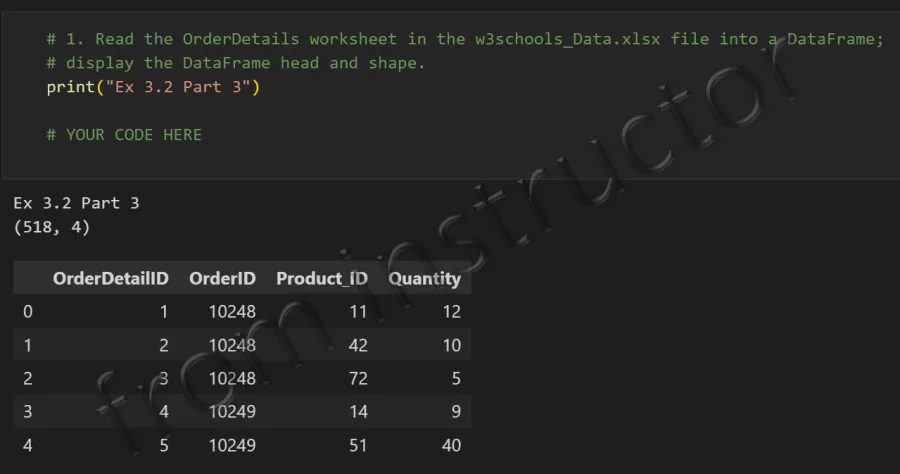
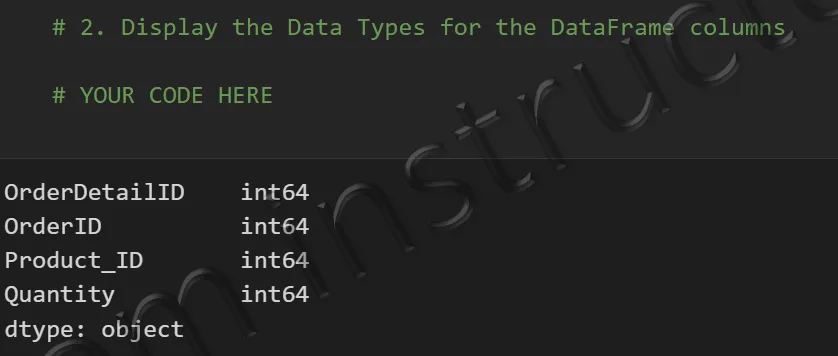
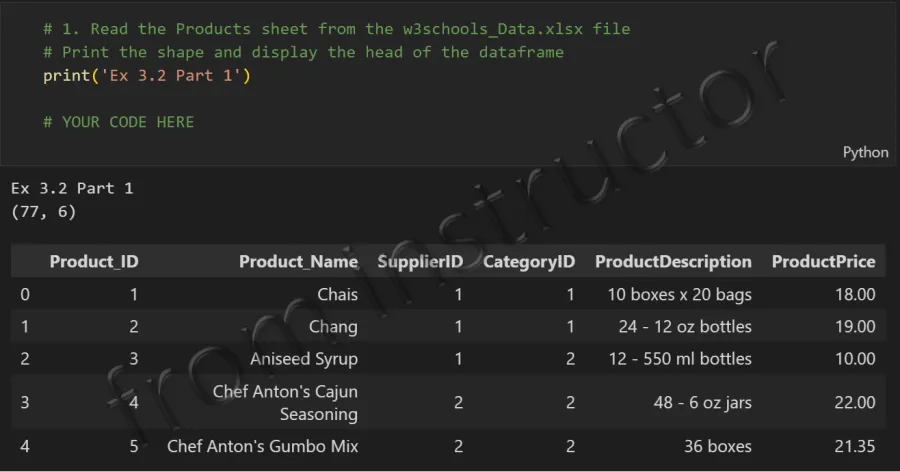
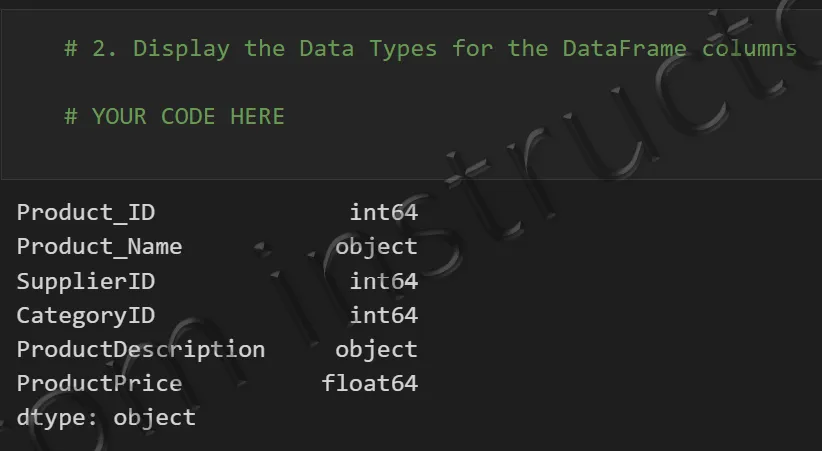
- Work through parts 1 through 3 and submit your completed Jupyter Notebook (.ipynb) file and the uv generated pyproject.toml file to the first quiz question on Canvas. Your notebook should include both your code and the corresponding output that match the screengrabs provided below. Be sure to run all cells so that every output appears in the notebook.
Part 1:
- You should have 77 rows and 6 columns in your dataframe. The first rows of you dataframe should look like:
Part 2:
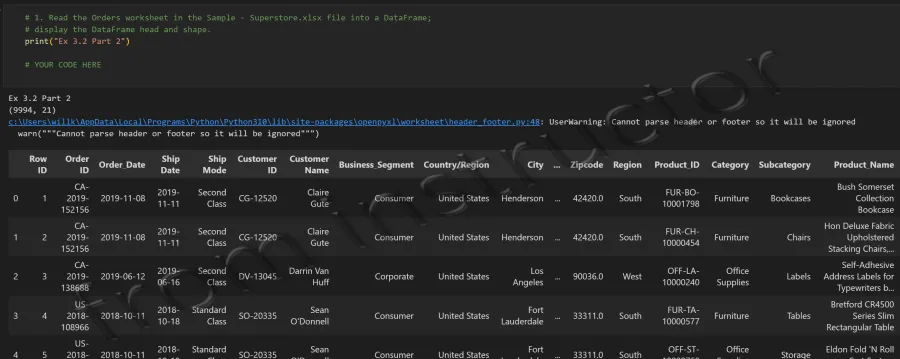
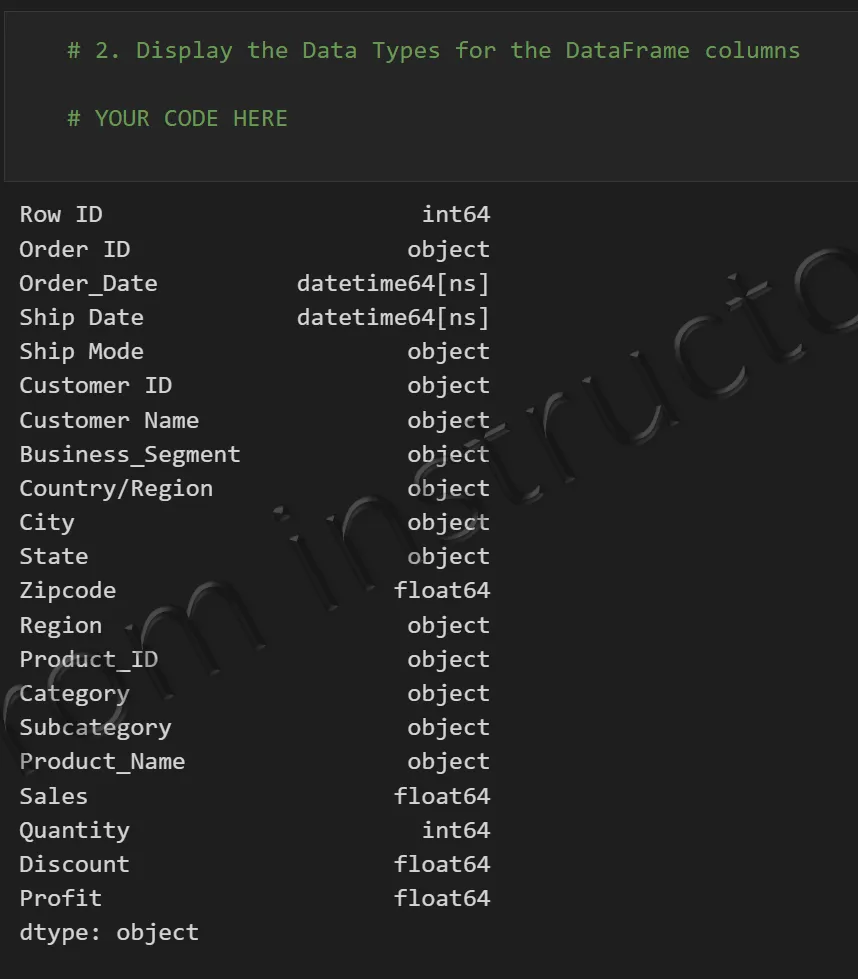
- You should have 9,994 rows and 21 columns in your dataframe. The first rows of you dataframe should look like:
Part 3:
- You should have 518 rows and 4 columns in your dataframe. The first rows of you dataframe should look like: